01
March
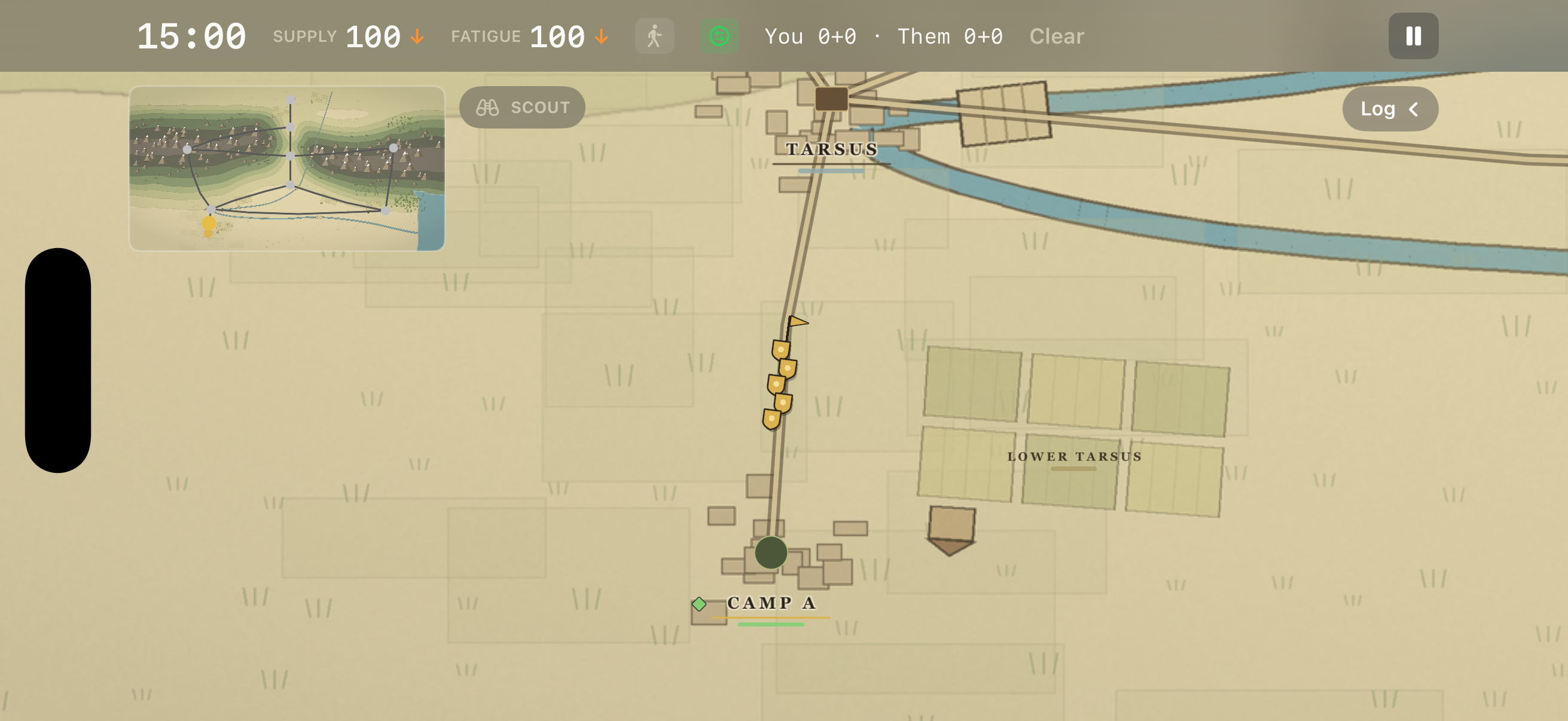
Tap a place or tap open ground. The column paths the terrain. Roads are cheaper than they look. Rivers block. A line on the map is an order not yet carried out.
Historical wargame · iPhone · Beta
A column is how an army travels. A line is how it fights. The whole game is the decision of when and where to turn one into the other.
15:00
Match clock
78
Contact radius
400
The Gates
Cilician Gates · 333 BC ✦ Column travels · Line fights ✦ Contact at 78 ✦ The Gates · 400 ✦ Supply is shared and never returns ✦ Form or walk in unformed ✦ Horses starve first ✦ Fifteen minutes. No sitting at home. ✦ Cilician Gates · 333 BC ✦ Column travels · Line fights ✦ Contact at 78 ✦ The Gates · 400 ✦ Supply is shared and never returns ✦ Form or walk in unformed ✦ Horses starve first ✦ Fifteen minutes. No sitting at home. ✦ Cilician Gates · 333 BC ✦ Column travels · Line fights ✦ Contact at 78 ✦ The Gates · 400 ✦ Supply is shared and never returns ✦ Form or walk in unformed ✦ Horses starve first ✦ Fifteen minutes. No sitting at home.
Chapter I · The name
Both sides start in their own camp at opposite ends of one theater and manoeuvre for position. Contact happens when the two columns come within seventy-eight world units — usually the consequence of a march given a minute earlier, not a decision made at the moment of contact.
When the buzzer goes, the higher score wins. Holding your own camp is worth nothing. Sitting at home is a losing strategy by construction.
Chapter II · Theaters of war
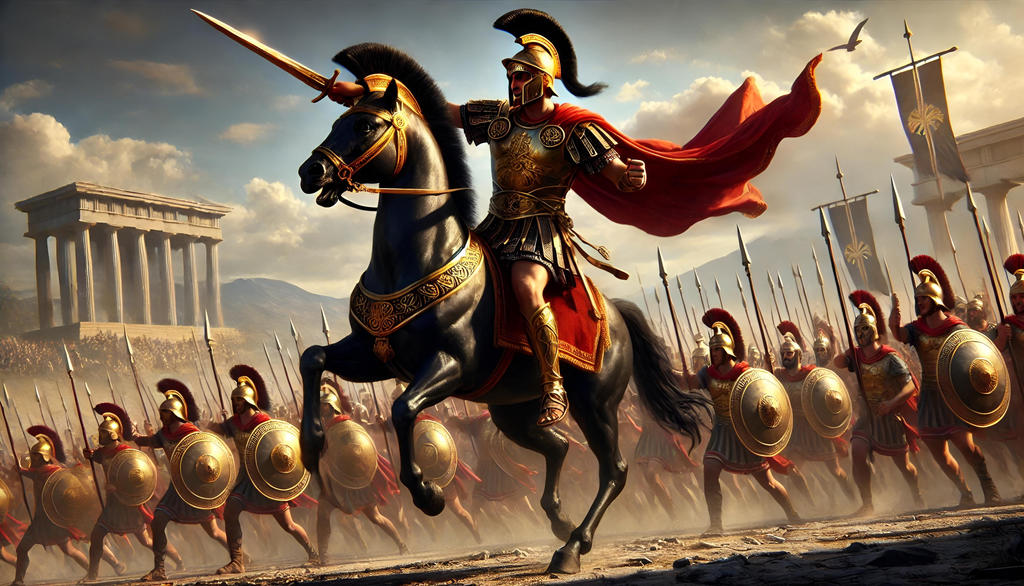
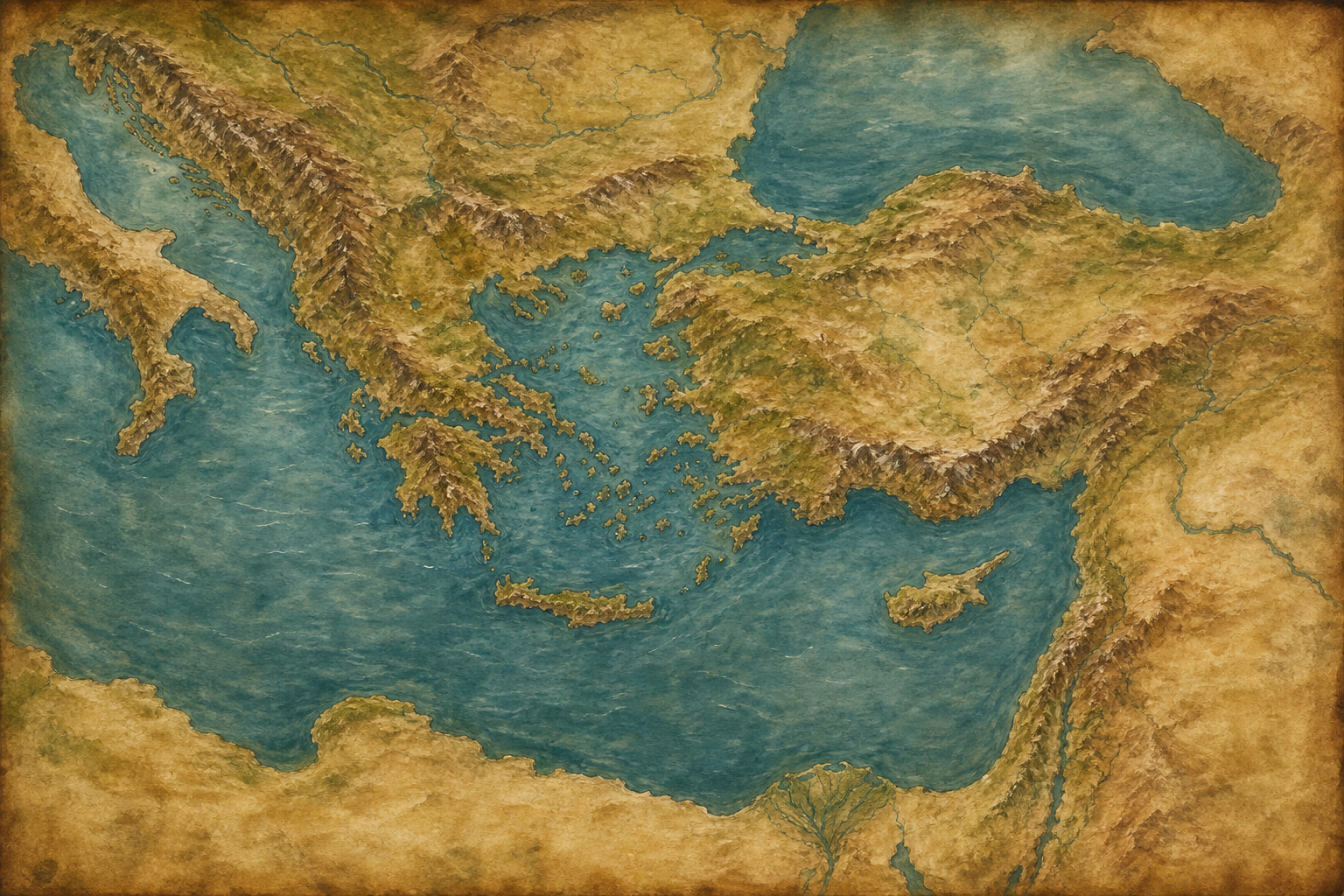
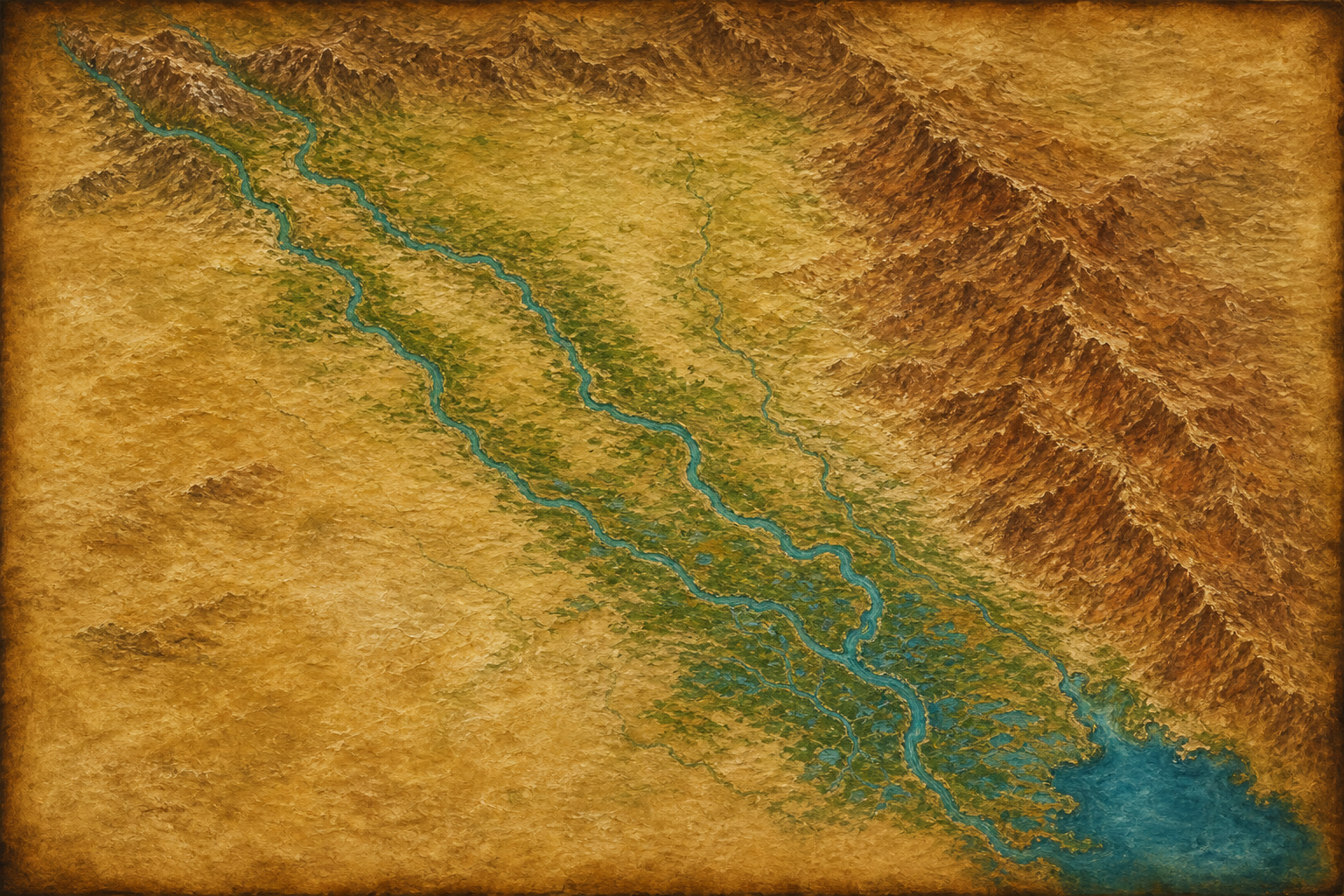
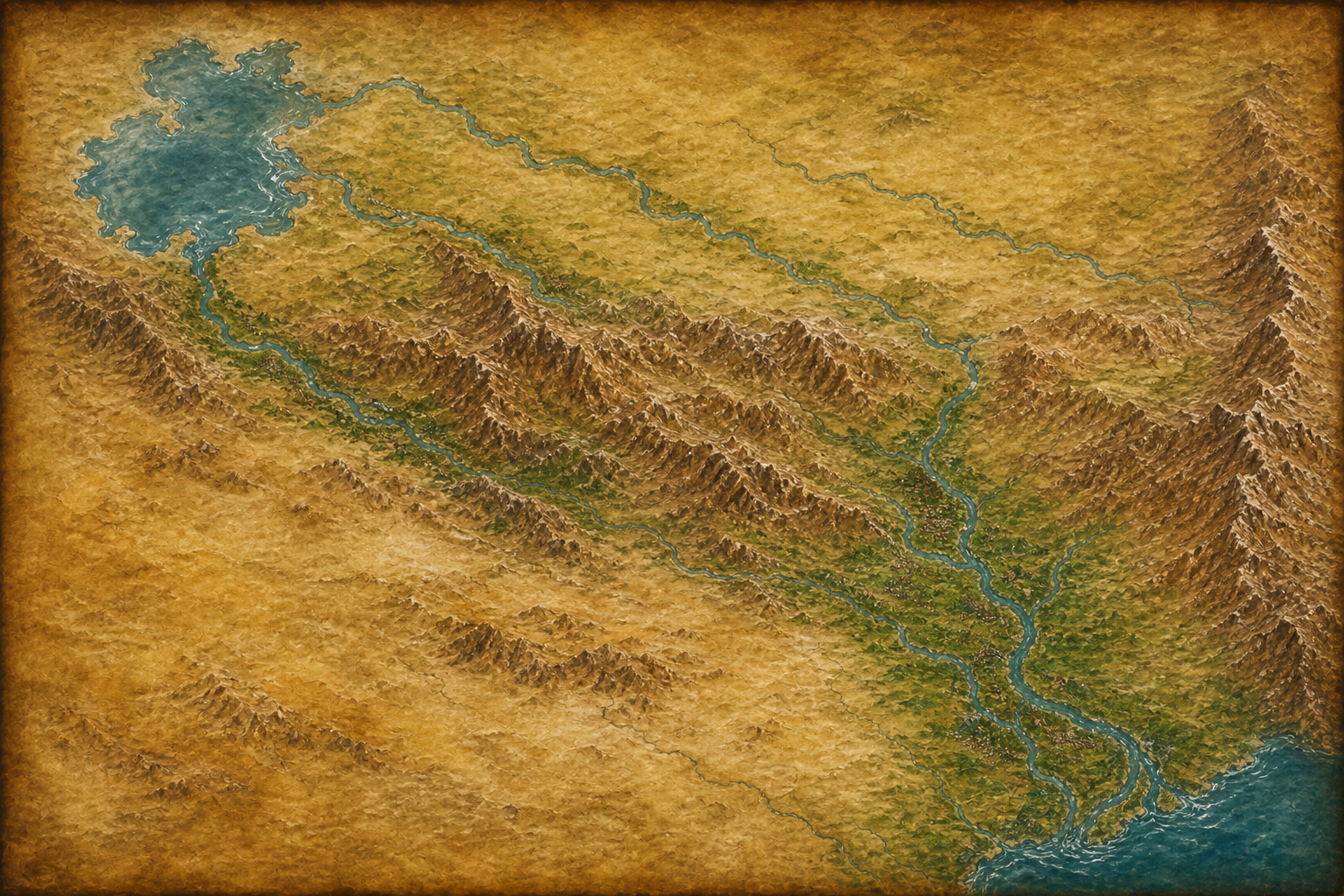
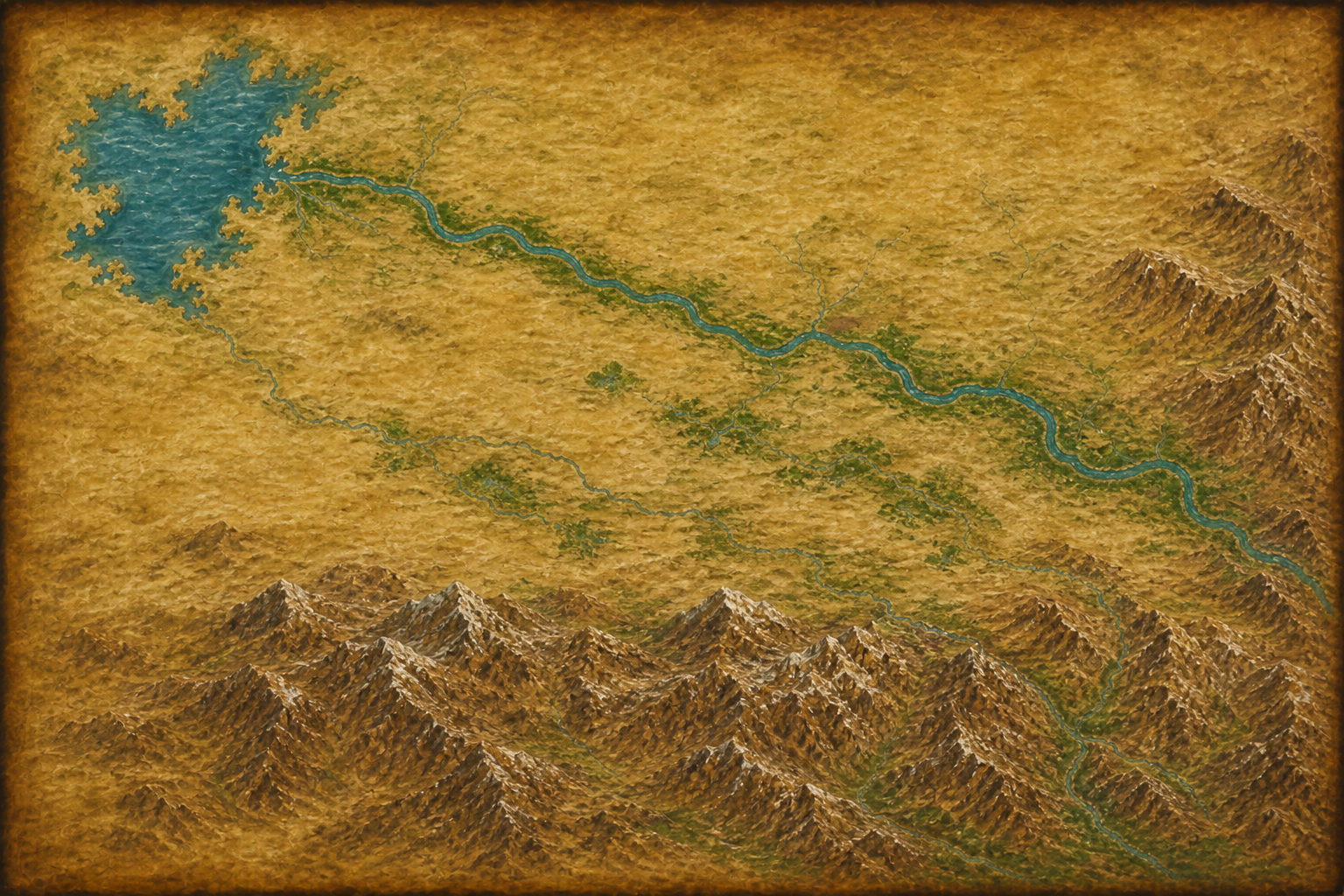
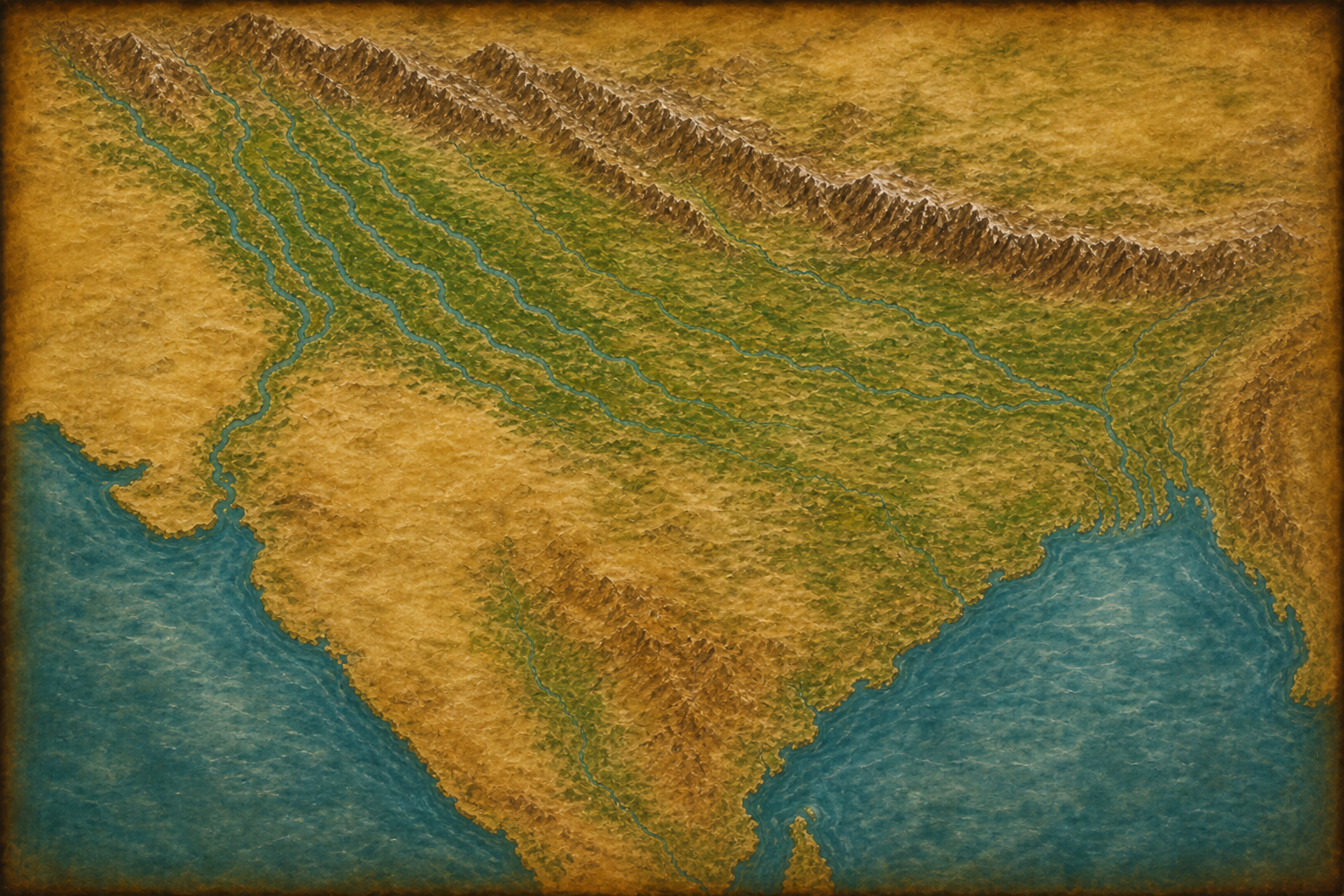
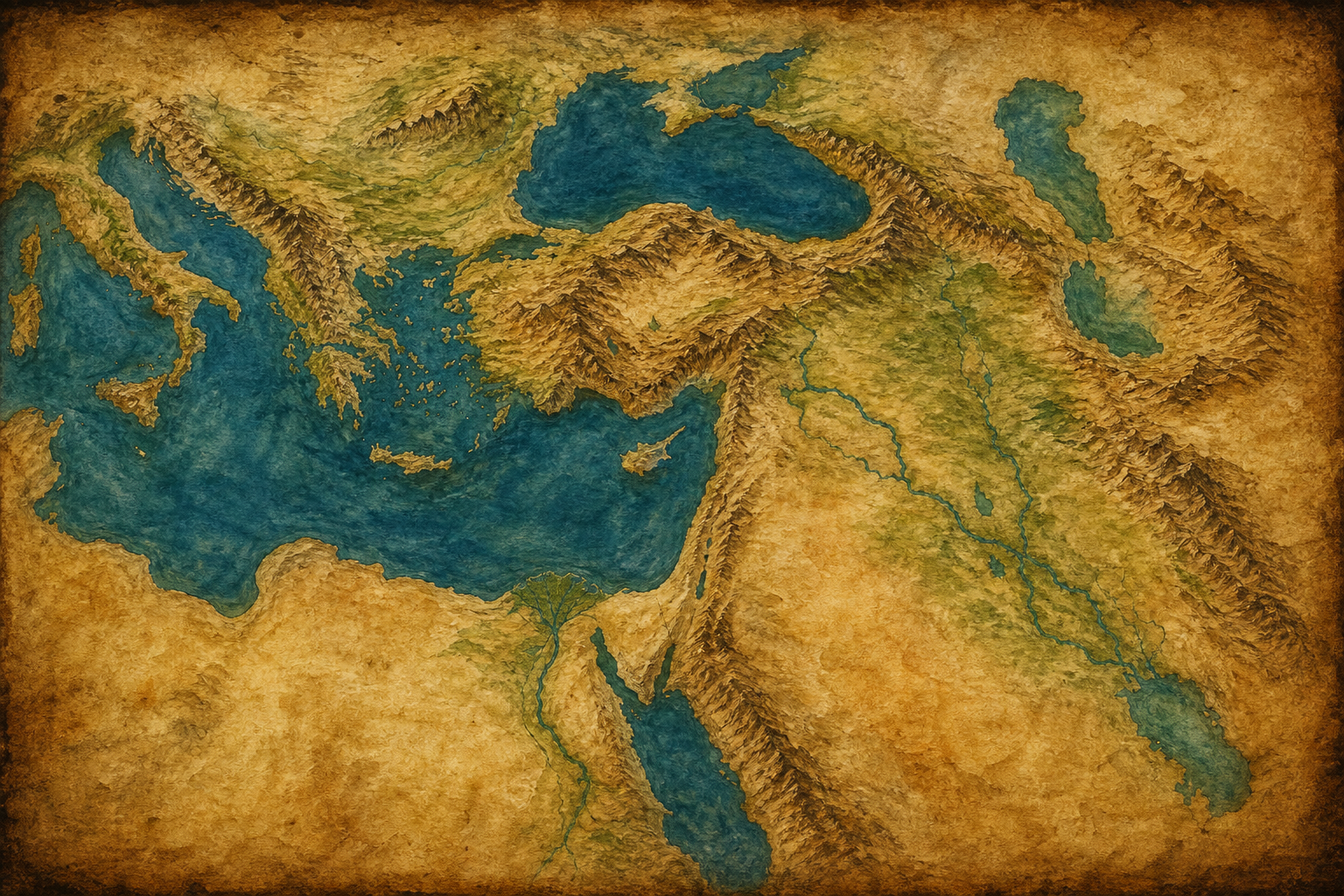
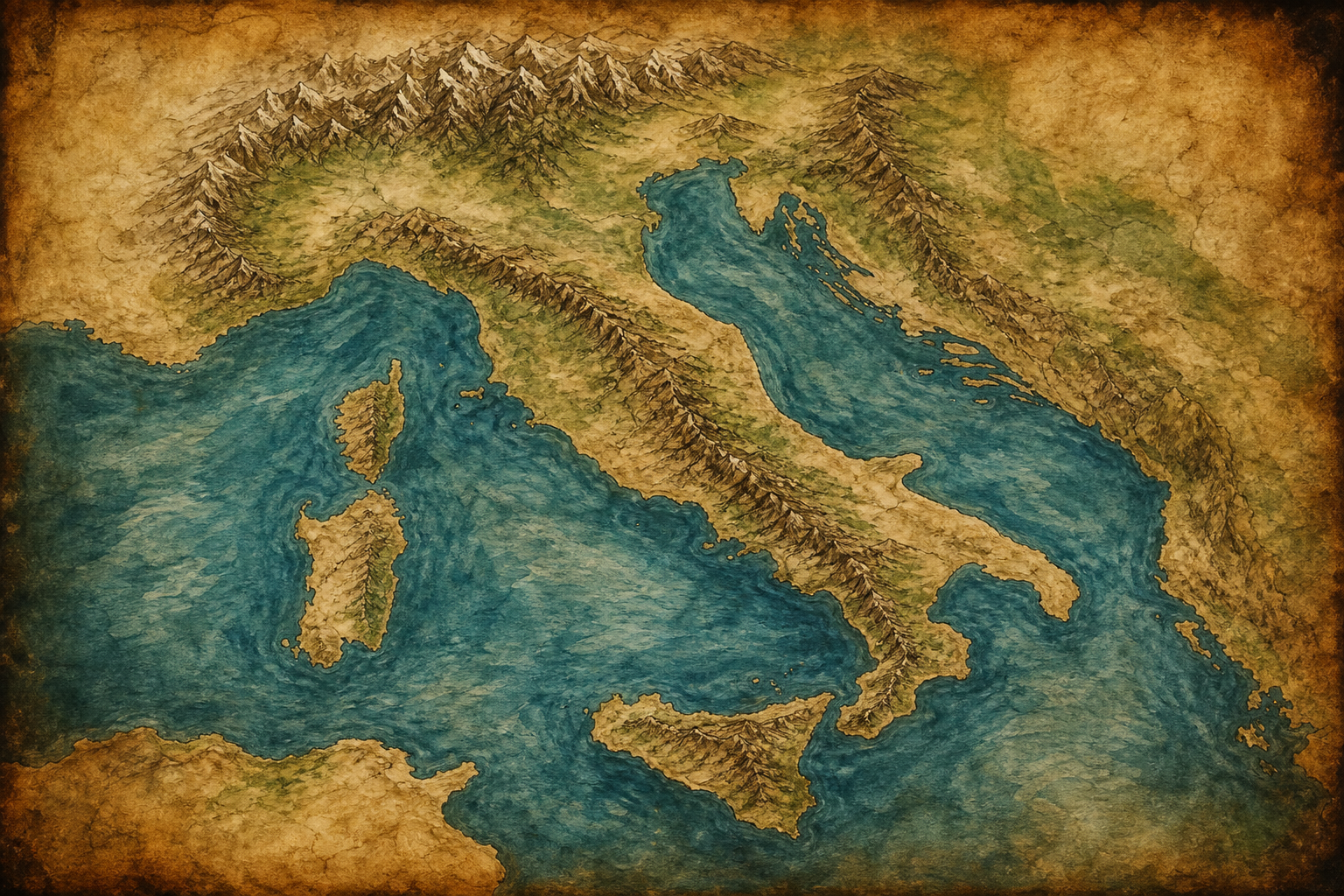
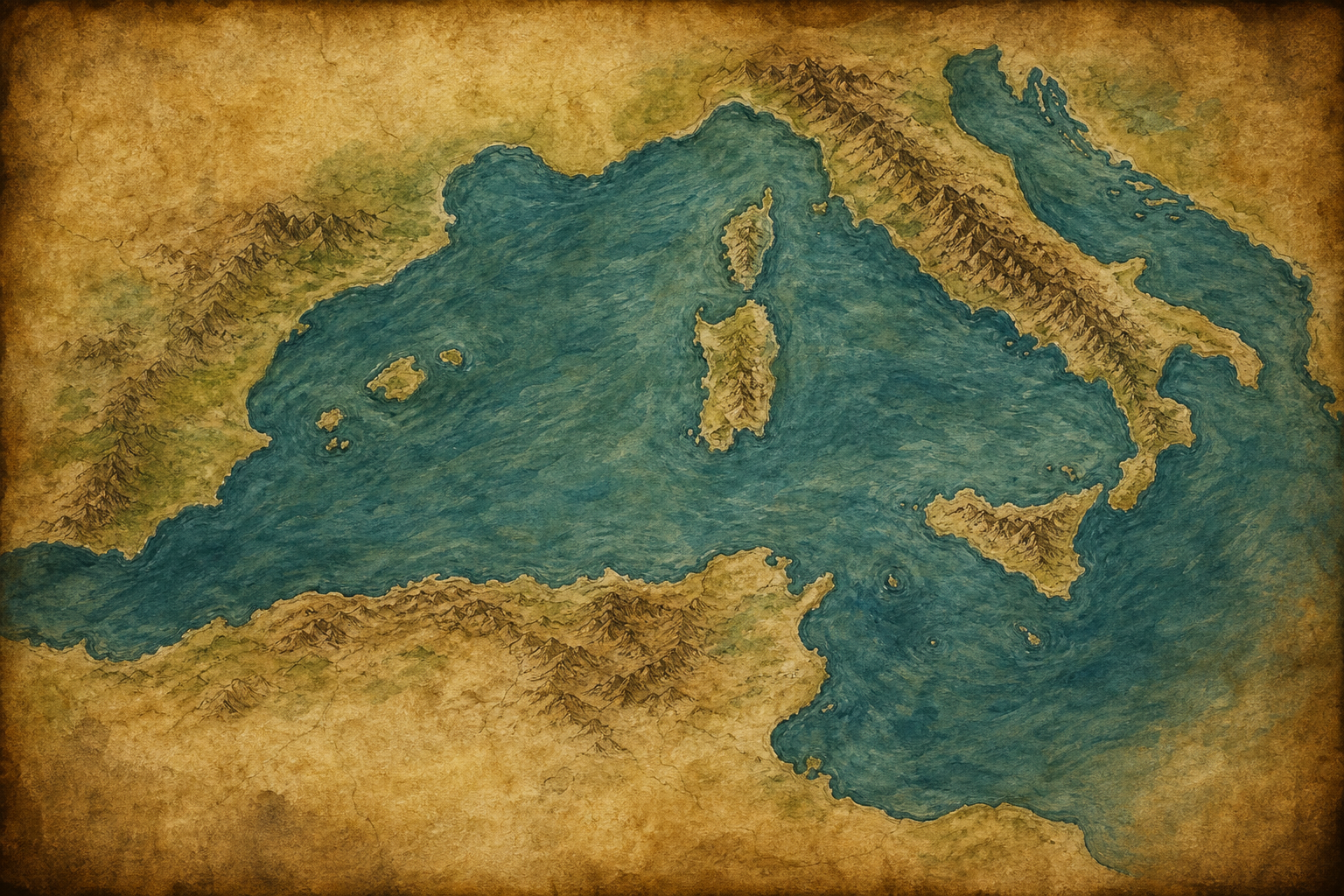
Each campaign is a painted theater: a graph of named ground laid over roads, rivers, ridges, and camps. You choose the war. Then you choose where on that map the blood is worth spending. The prize is never the same twice.
336–323 BC
Alexander
Greece to the Cilician Gates. The only playable war. The pass is the centre of gravity.
331 BC
Mesopotamia
The road to Gaugamela. Painted. Not yet a match.
330–327 BC
The East
Beyond the Zagros. Satrapies that do not stay quiet.
329 BC
Jaxartes
The river at the edge of the known world.
327–325 BC
India
Hydaspes and the army that finally said no.
323–281 BC
Diadochi
The successors tear the empire apart.
49–45 BC
Caesar
Civil war. The Rubicon is a decision, not a river.
218–201 BC
Second Punic
Hannibal across the Alps. Rome across the sea.
1189–1192
Third Crusade
Kings on the road to Jerusalem.
Late Bronze
Conquest of Canaan
Hill country, fords, and walled towns.
1274 BC
Kadesh
Chariots in the Orontes bend.
Chapter III · Doctrine
01
Tap a place or tap open ground. The column paths the terrain. Roads are cheaper than they look. Rivers block. A line on the map is an order not yet carried out.
02
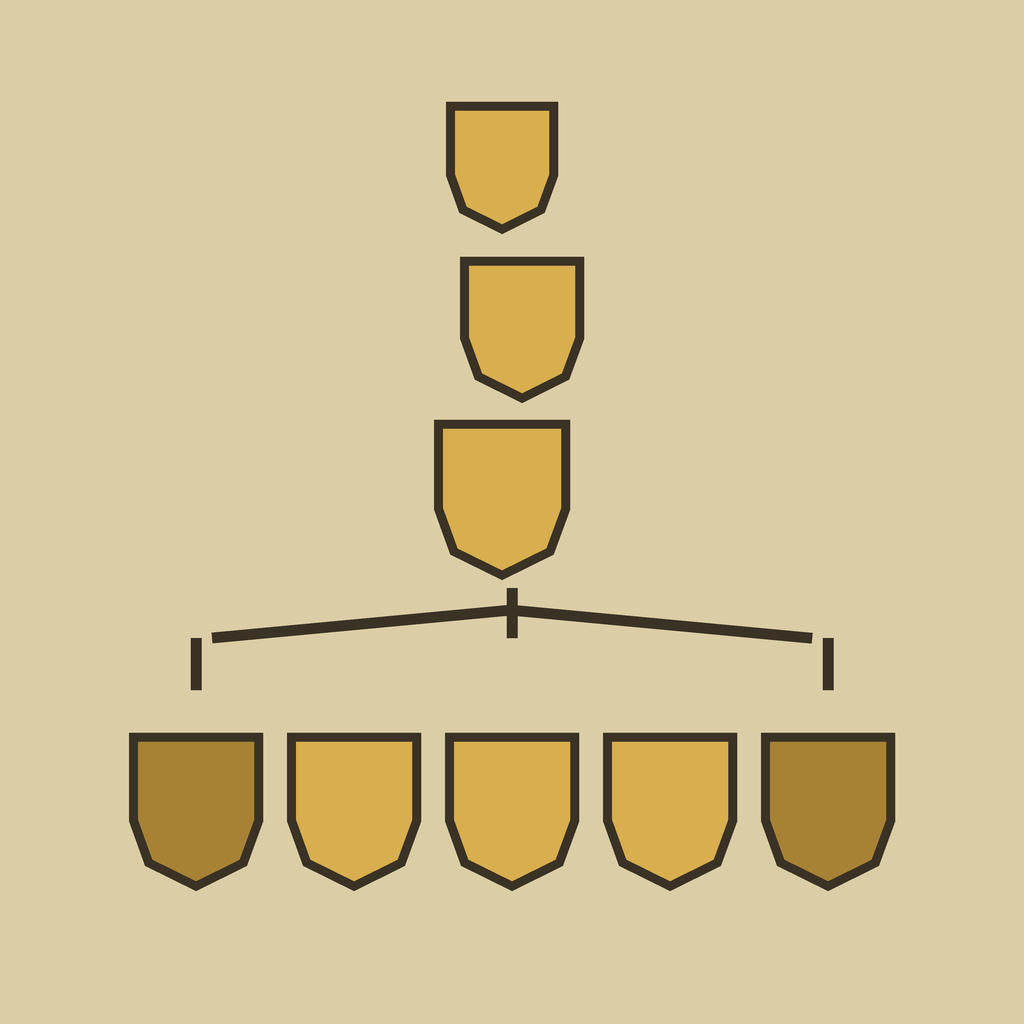
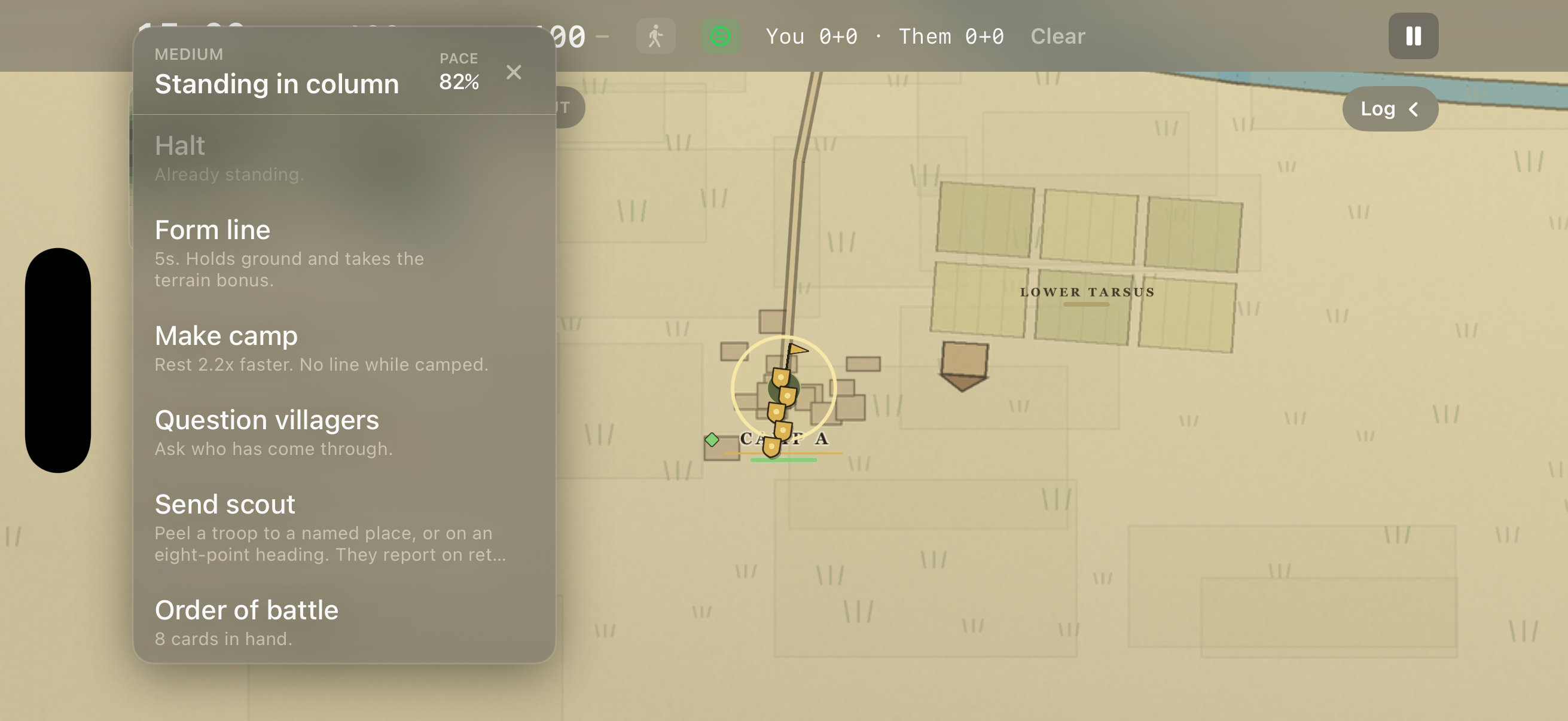
Column travels. Line fights. Forming takes ten seconds standing still. A halt is not a line. An army that never formed is as exposed as one still walking.
03
Stock is finite and shared. What you eat is gone for them. Cut from a depot and the drain jumps to twelve. After forty seconds empty, cards start dying. Horses first.
04
Freshness is effort. Heavy troops bleed on slopes. Camp recovers faster — once the tents are up. A camped army cannot hold a line. That is the price.
05
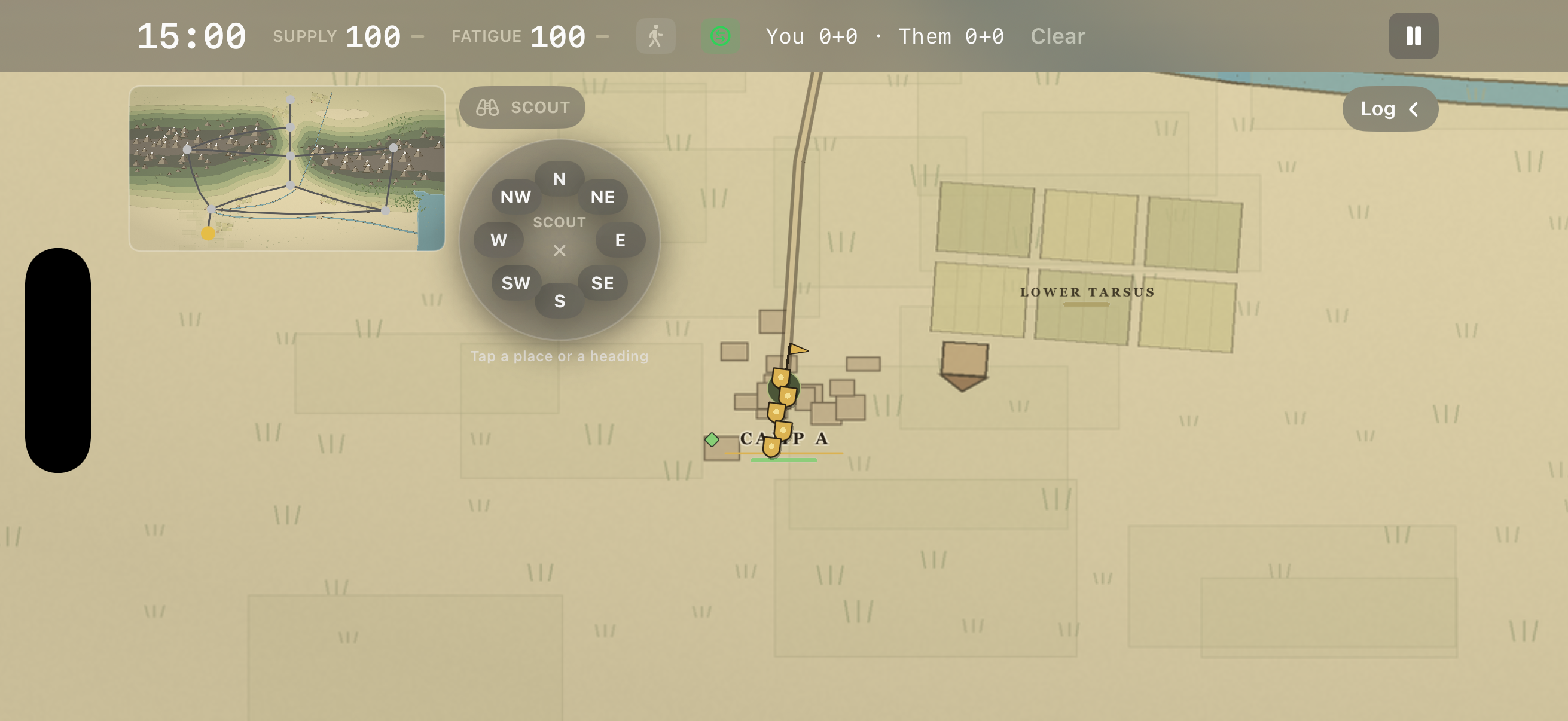
A scout is a horse detachment. They report on return, not live. Last-seen fades. Villagers tell the truth in Vs AI. You see the enemy column only at three hundred and sixty.
06
Contact fires at seventy-eight. Neither side chooses it. The way to decline a battle is to be faster. The fight you get is the march you ordered a minute ago.
Chapter IV · The clash
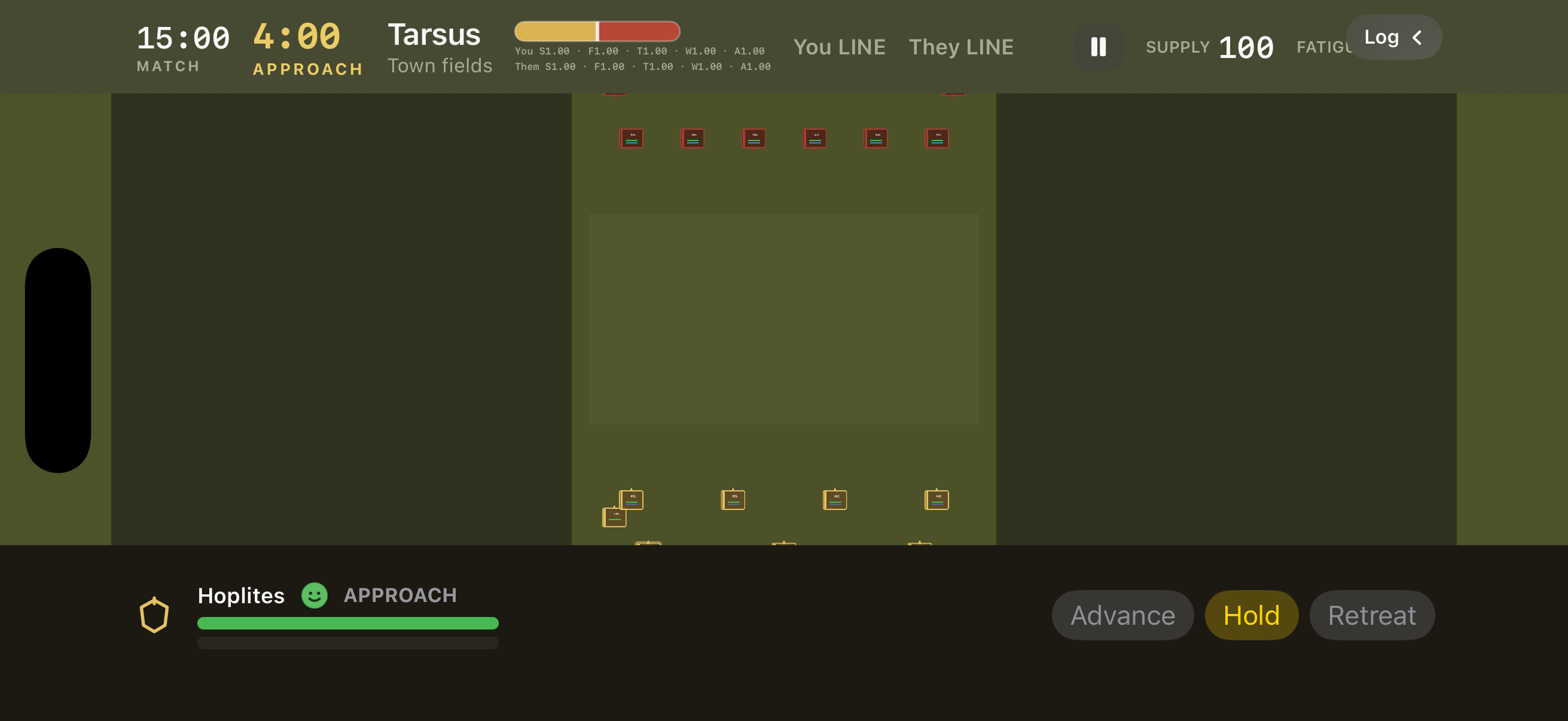
Both armies deploy on their own baseline with a killing ground between them. Caught marching, you deploy in column — a handicap — and start a little closer. Still not in contact. The fight opens on the approach.
Balance of power is locked before anyone moves: supply, fatigue, terrain, weather, approach. Clamped 0.50 to 1.40. Casualties do not rewrite that number. You already paid for this fight on the road.
The clash layer →
Hoplites · Hypaspists · Camp guard
Strength 0.85 – 1.30
Slow. They win by grinding. A dressed clash is a couple of minutes, not an eight-second melt. One block of hoplites holds back an army of cavalry.

Peltasts · Archers · Javelins · Agrianians
Strength 0.88 – 1.20
Limited ammunition. They skirmish: retreat while shooting to keep range open. A visible sheaf, then reload. Archers outrange javelin troops by half.

Companions · Light horse · Thessalians
Strength 1.05 – 1.35
Fast. Hits hardest. A charge into new melee dumps shock. Peel one troop and they become your scout. No horse means no eyes.
Chapter V · The wars
336–323 BC
LiveGreece to the Cilician Gates. The only playable war. The pass is the centre of gravity.
331 BC
ComingThe road to Gaugamela. Painted. Not yet a match.
330–327 BC
ComingBeyond the Zagros. Satrapies that do not stay quiet.
329 BC
ComingThe river at the edge of the known world.
Army list
Five heavy · three light
Three hoplites, hypaspists, camp guard, archers, two peltasts. Built to take ground and keep it. The climb to the pass is expensive — heavy troops tire fastest on slopes.
Army list
Five light · three horse
Three peltasts, javelins, agrianians, archers, light horse, companions. Fast, sees further, works the coast road or raids the hinterland. Loses a straight grind.
Chapter VI · How you play
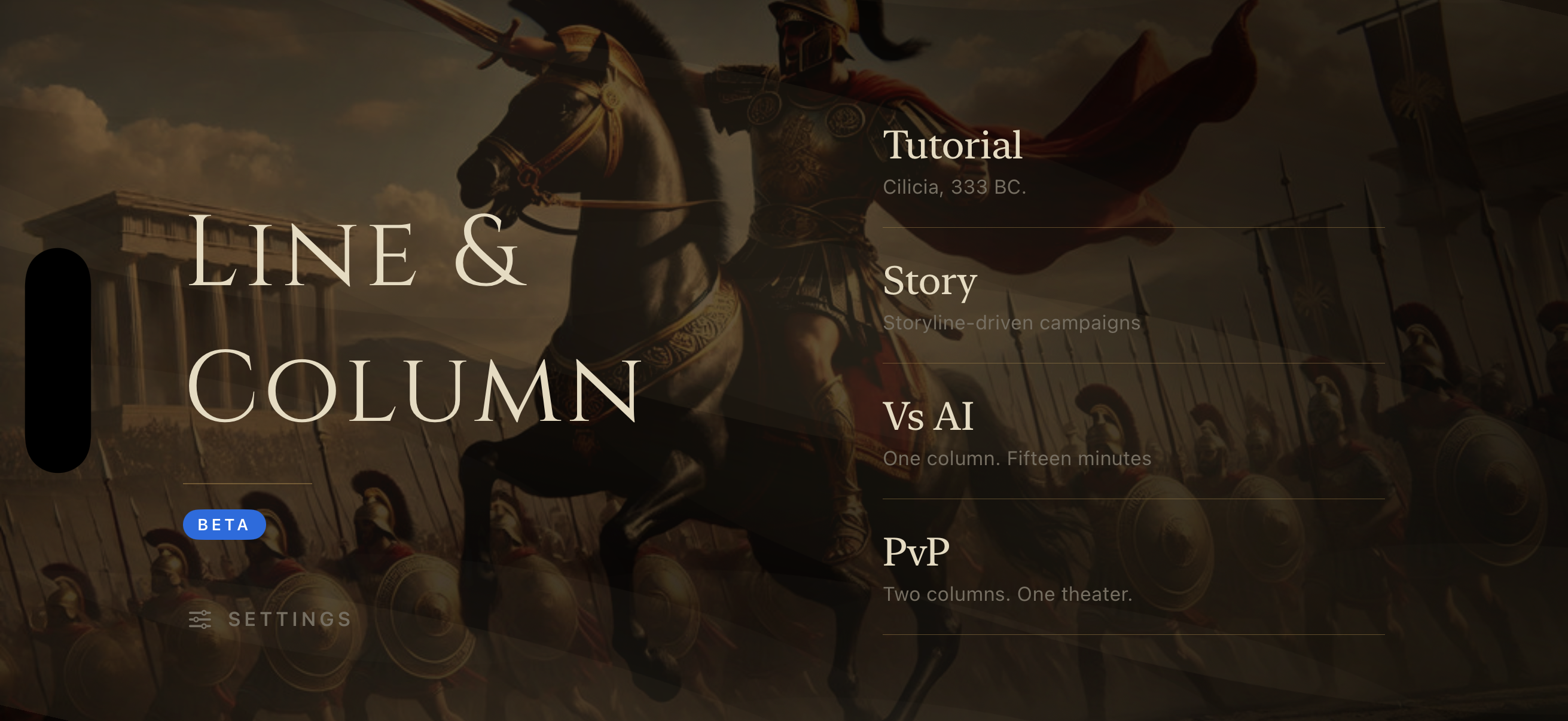
Cilicia, 333 BC
FaceToast teaches by giving you the same orders you will keep. No lecture overlay. Six beats, then the live game.
Alexander is live
Greece to Issus on the first plate. Mesopotamia waits on the next. Diadochi, Caesar, Punic, Crusade, Canaan, Kadesh sit on the shelf.
One column. Fifteen minutes.
Aggression is a single number. Easy raids the flanks. Hard goes for the pass, forms on sight, and hunts a column it can see.
Two columns. One theater.
Host and join on the same Wi-Fi. The host simulates. The guest commands. No pause. No AI.
Command
Native iOS. No third-party stack. Fifteen minutes, one theater, eight cards. Open the project, pick a list, and march.